remembrance is embodied
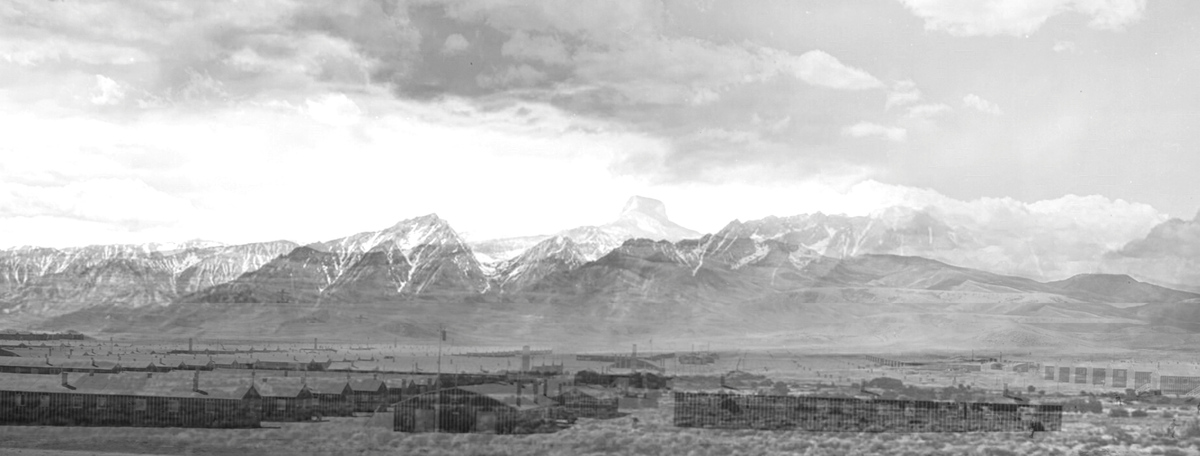
Throughout my 20s, I was very focused on recording family history. My grandparents were aging, and with that, their memories and/or their ability to share faded over time. I was working in the Nikkei (Japanese diasporic) community, where a lot of energy was put towards remembering and educating others about the incarceration of our community during WWII. So I would ask my grandparents, who were held in concentration camps, what their experiences were like, what their childhoods were like, and what it was like resettling in a completely new place afterwards.
To be completely honest, it wasn’t just curiosity that guided this effort to collect these stories - it was anxiety.
If I don’t do this - who will? If I don’t ask these questions or save this information, no one will ever know.
Remembering our stories is like survival in a country that actively tries to whitewash and scrub its past. We see this in the ways the government has historically used forced assimilation, censorship, and erasure of certain histories.
During WWII, when Japanese Americans were forcefully relocated and put into camps, they were only allowed to bring what they could carry. Along with the enormous financial impact, there was also a deep cultural loss. Many families were not able to bring or preserve photographs, family heirlooms, or other meaningful items. Following the incarceration of Japanese Americans, the government told people being released from the camps that they should join white communities, stop speaking Japanese, and not gather with other Japanese people. (Read more about this in this wonderful WBEZ piece by Katherine Nagasawa)
This silencing happens in many ways on different levels. And younger Mari, who was shut down by teachers, other adults, and peers for sharing the truth of my family’s story, felt the need to justify why WWII incarceration was wrong. I had to gather all the evidence I could to demonstrate that my family and community deserved to be treated as humans. Looking back, I think it was my way of trying to figure out who I am and my place in the world.
So, I paid for an Ancestry.com subscription, printed and archived various documents, attended multiple workshops on the topic, and visited the largest genealogical research facility in the world in Salt Lake City. All in search of whatever bread crumbs of evidence I could find of my family.
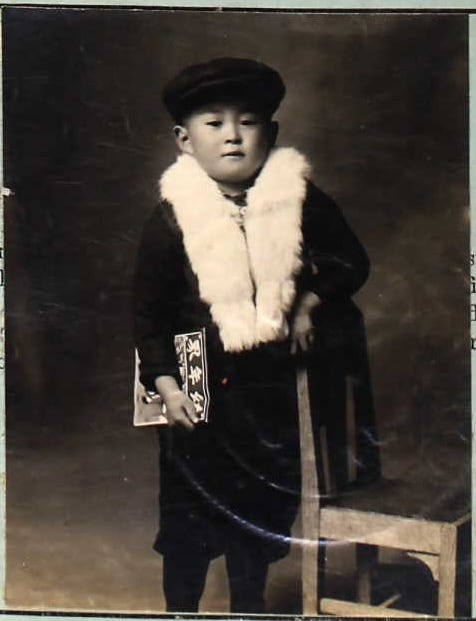
I discovered precious new things in this process - such as my great-grandmother’s naturalization certificate and a draft card in my Jichan’s handwriting. My favorite artifact I found was a passport photo of my Grandpa when he was 4 years old, all dressed up, looking cute and fancy! I had never seen another photo of him as a child because they were all lost in a fire long ago.
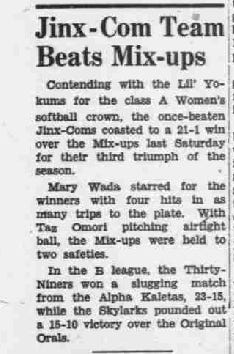
This process was exhilarating at first. It felt meaningful to learn more about my ancestors. I was learning about myself and where I came from. I was able to imagine new stories and possibilities.
It also felt a little cold. A little soulless.
I could collect all the information I wanted, but the connection that really matters can’t be found in these archives. My ancestors were SO much more than these government documents portrayed. We are more than these ship logs, incarceration records, draft cards, and marriage certificates.
One day, a new realization rose up inside of me:
Remembrance is embodied
Remembrance is not a cold process captured by official documents. But rather, the remembrance I was really looking for comes through connection to ourselves and one another. I understood, for the first time, that the wisdom and experiences of my ancestors are, in some form, within me.
Even though I don’t have the official documents to prove it, there is a deep knowing. Even after their lives on this earth are complete, their presence can still be experienced now. After providing care for a loved one with dementia for several years before her passing, I also know that even as our conscious memories fade, our bodies hold memories. Even if I am not always aware of it, traces of my loved ones are soaked into my being.
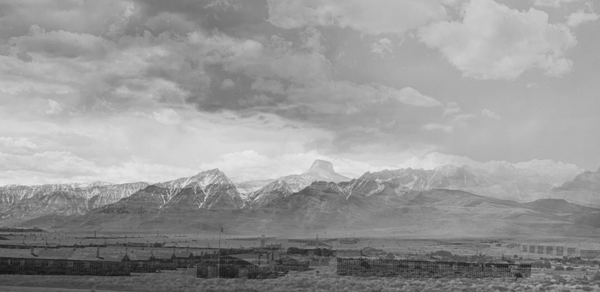
For me, embodied remembrance looks like visiting Manzanar concentration camp site and feeling my late Bachan’s words accompanying me in my grief and mourning. It’s the warm fire that is lit in my chest when I recall my Jichan sharing about his open resistance while in the army. It is the love of the sweet, fresh fruit that my grandpa brought us that nourished me from the inside out. The elaborate blankets that my grandma crocheted for each of the grandchildren have kept me feeling safe and warm through many Chicago winters. Remembrance is tasting the earthiness of the udo that my dad grows each year from a cutting my great-grandmother smuggled into the U.S. generations ago, with the intent of preserving a piece of home.
Embodied remembrance for me is writing a poem in collaboration with my Bachan, who passed 10 years ago, knowing that she is still present with me. After she passed, I found a box that held some typewritten pages, including an essay written while incarcerated at Heart Mountain during WWII. I don’t remember her saying the words in her essay to me, but something inside me recognized them as familiar. As I wrote and edited the poem, I felt the warmth of her love accompanying me, inspiring me, conspiring with me. As if our connection doesn’t simply exist in this tangible, linear world, but it transcends time and space.
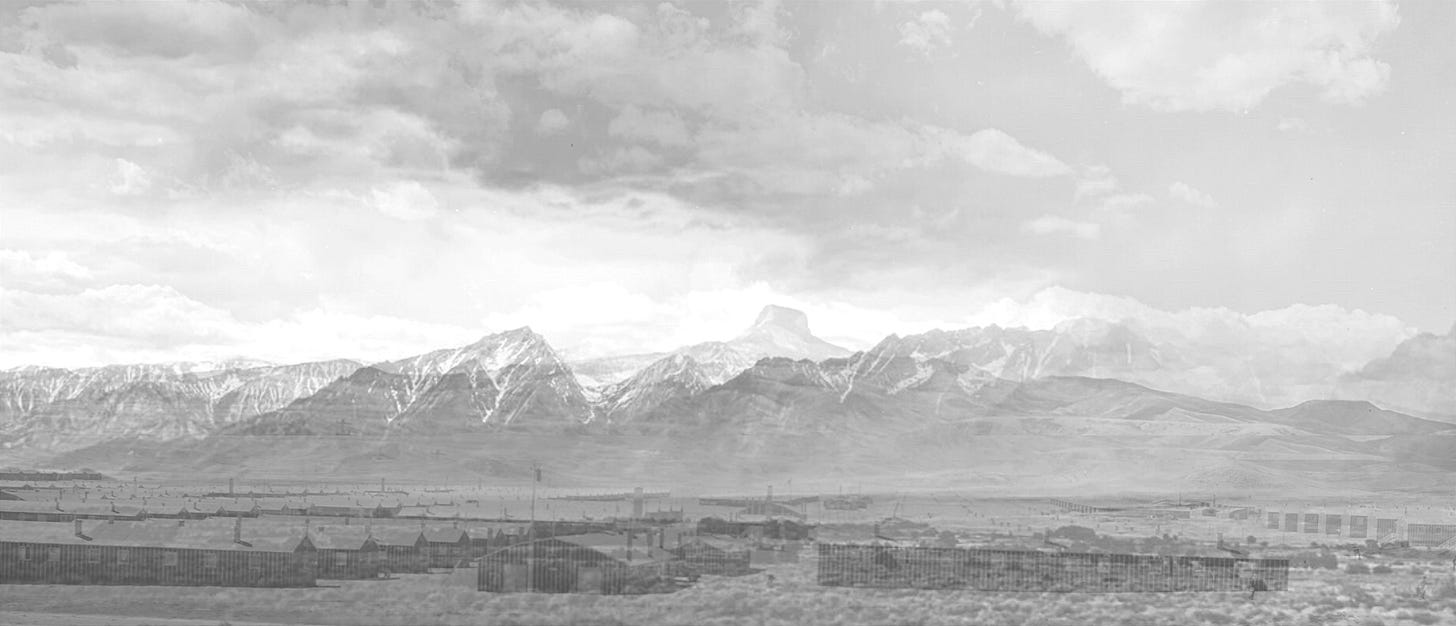
Last week, I shared this collaborative poem at an intergenerational community conversations program. I grieve the fact that there are so many conversations I wish I had with my own grandparents and so many questions that I wish I had asked. But as I shared our poem, I was reminded that the validity of our connection isn’t measured by the number of documents bearing our names. Our connection is a knowing, expressed in body and spirit.
I have nothing against genealogical work or seeking tangible evidence from those who came before us. However, I want any and all of that seeking to come from curiosity rather than anxiety, and for the connection to not begin and end with a piece of paper. I want any further research to come from a place that trusts the connection is already there and accessible to me. All I need to do to access that connection is to be present and make space to listen.
To me, this collaborative poem means more than any photograph or government record. It’s Bachan and me. It’s past, present, and future all at the same time. It’s love vast enough to flow over generations, miles, and planes. This ancestral gift is a balm for my anxiety, and a reminder that if I don’t have anything else, we still have each other. That is something that the state can never take away, as hard as they may try.